Introduction
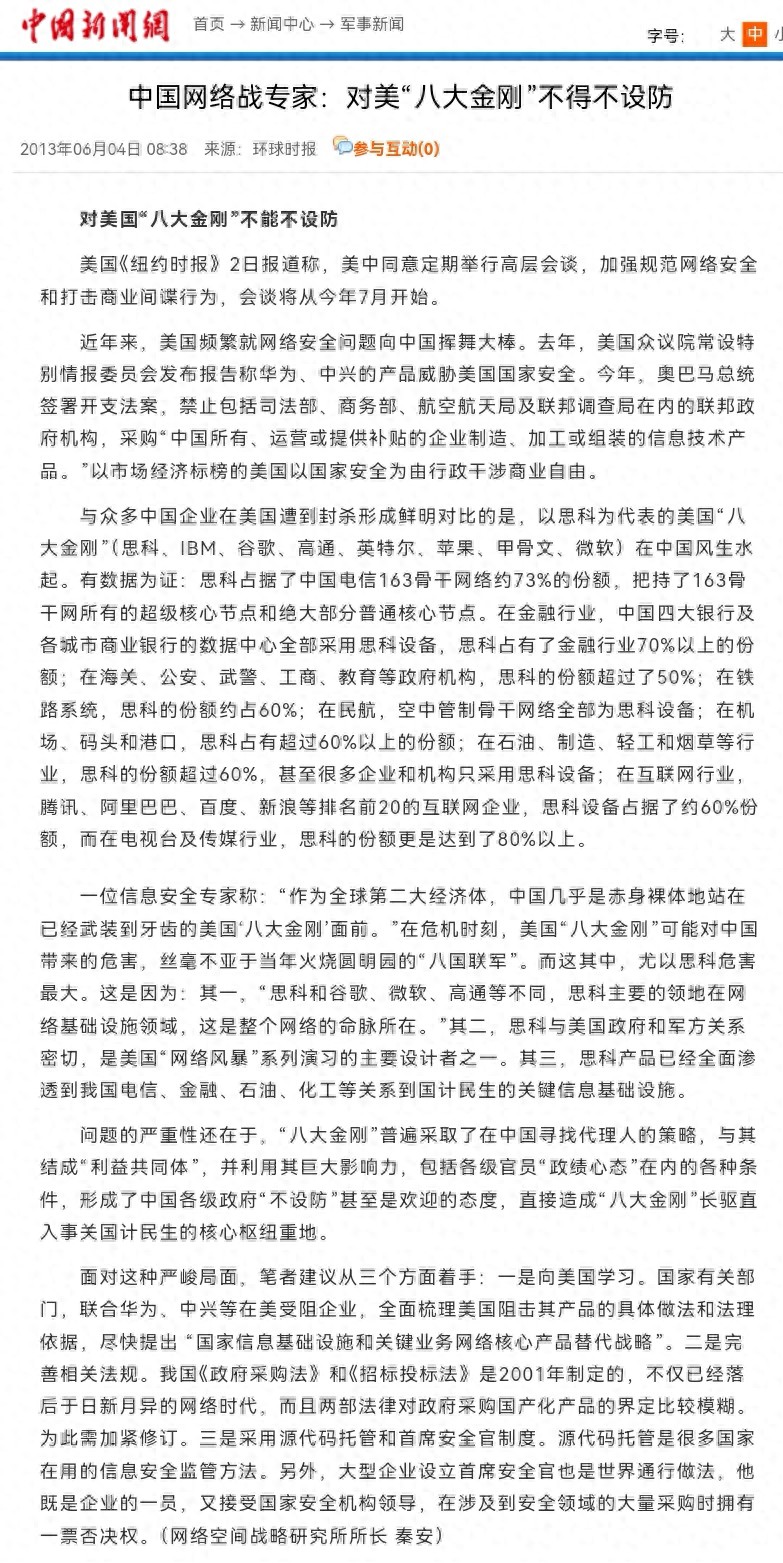
On June 4, 2013, I published an article titled “The Eight Giants Must Be Guarded Against” in the Global Times, a day before Edward Snowden revealed the “Prism” scandal in The Guardian. This article sparked significant attention, discussing eight multinational IT companies as instruments of U.S. cyber hegemony.
At that time, I wrote: As the world’s second-largest economy, China stands starkly before the “Eight Giants” of the U.S. In times of crisis, the potential harm from these “Eight Giants” could rival that of the Eight-Nation Alliance that burned the Summer Palace. This article served as a strategic warning and marked a significant event in my deeper exploration of the strategy of building a strong cyber nation.
Recent Developments
Today, on Labor Day, we observe similar threat signals. The U.S. Department of Defense announced agreements with seven leading AI companies to accelerate the transformation of the U.S. military into an “AI-dominated” fighting force. The companies involved include SpaceX, OpenAI, Google, NVIDIA, Reflection, Microsoft, and Amazon Web Services (AWS).
The statement emphasized that these agreements aim to enhance the military’s decision-making capabilities across all warfare domains. This “AI-dominated” military force is equipped with what is referred to as “AI nuclear weapons,” which, like cyber warfare, represent a form of explosive weaponry.
The Role of SpaceX
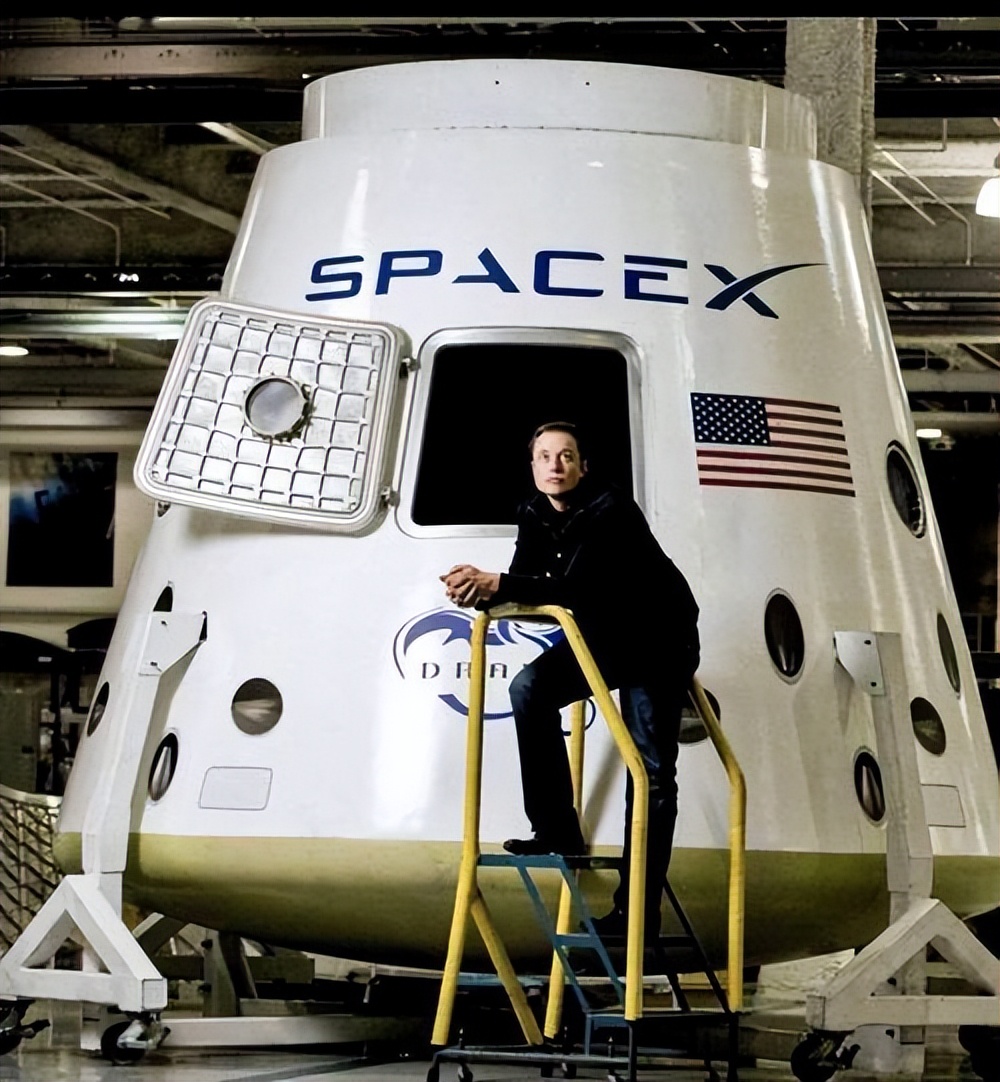
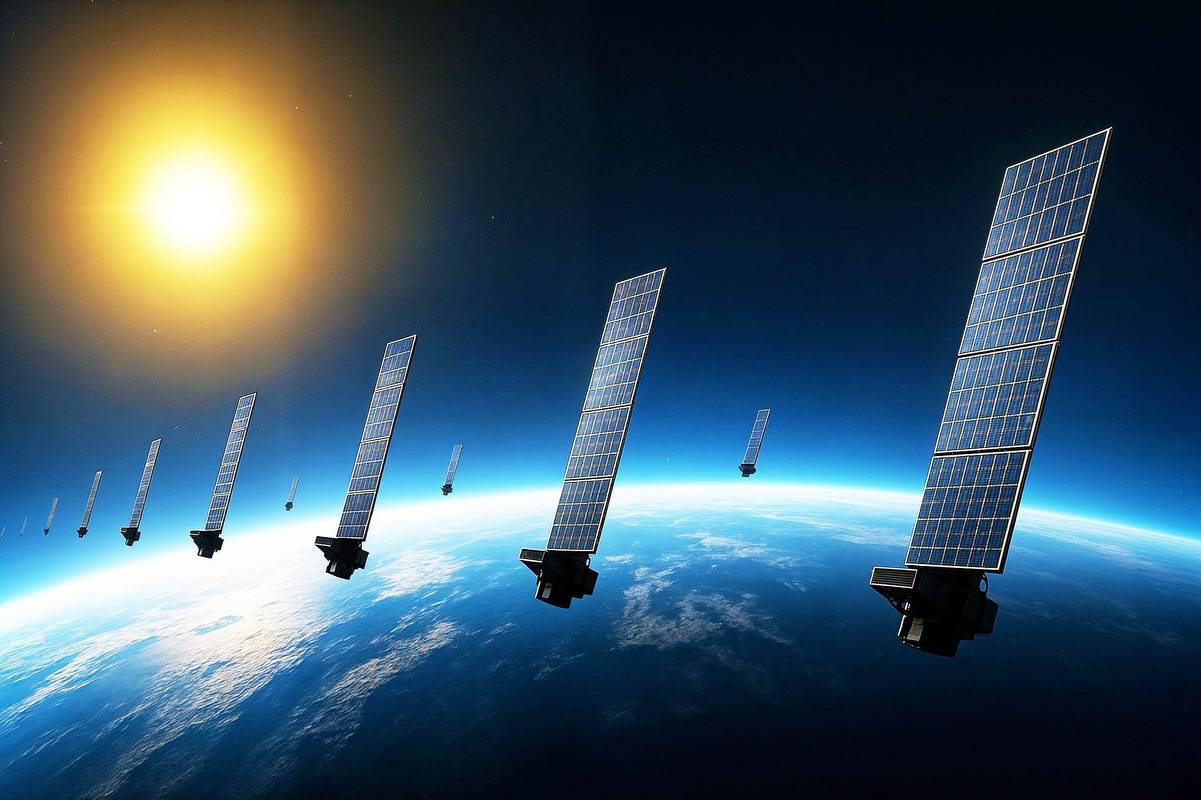
Particularly concerning is Elon Musk’s SpaceX, which has nearly 10,000 Starlink satellites and has applied for resources for 1 million more. At night, we can even see lines of Starlink satellites crossing our skies, revealing their significant potential dangers.
Firstly, Starlink satellites have been indispensable in U.S. interventions in wars in Ukraine, Venezuela, and Iran. They have become crucial tools for the U.S. in undermining foreign governments.

Secondly, a Falcon 9 rocket from SpaceX is expected to crash into the Moon. A Falcon 9 upper stage (2025-010D) has been confirmed to be out of control, anticipated to impact the Moon on August 5, 2026, at approximately 7 Mach (2.43 km/s).
Thirdly, Starlink satellites have dangerously approached China’s space station, triggering emergency evasive maneuvers. On July 1, 2021, Starlink-1095 descended from 555 km to 382 km, intruding into the safety zone of the space station (approximately 390 km), prompting urgent adjustments from China. Again, on October 21 of the same year, Starlink-2305’s erratic maneuvers brought it dangerously close, necessitating further evasive action.
Fourthly, SpaceX announced plans to lower the orbits of thousands of satellites, effectively allowing them to target any location on Earth. In early 2026, SpaceX revealed it would lower 4,400 Starlink satellites from 5,500 km to 480 km. As of April, around 1,800 had begun this descent, with 800 already deployed. Alarmingly, China’s space station orbits at about 390-400 km, leaving only an 80-90 km buffer with the descending Starlink satellites.
Considering that Tesla’s autonomous vehicles are now prevalent in China, with sales reaching between 2.3 to 2.6 million by April 2026—29% in Beijing (approximately 670,000-750,000), 24% in Shanghai (about 550,000-620,000), and 19% in Guangdong (around 440,000-490,000)—the potential risks of U.S. military control over these vehicles are immeasurable.
Strategic Recommendations
We must recognize that China’s advances in aircraft, ships, including aircraft carriers, and missiles do not encompass the threats posed by the “AI nuclear weapons” supported by the U.S. military through its “AI Seven Demons.” In times of crisis, threats from SpaceX and the “AI Seven Demons” emerge from space and control networks, potentially affecting major cities. The higher China’s digital upgrade, network collaboration, and intelligence levels, the greater the potential harm.
To counterbalance the U.S. “AI-dominated” military capabilities, the Qinan Strategic Think Tank recommends focusing on three areas:
-
Achieve a comparable number of low Earth orbit satellites. Currently, China’s low Earth orbit satellite resource planning has reached 203,000, but SpaceX alone has expanded to 1 million. The U.S. has nearly 10,000 satellites in orbit, while China has just over 1,000, indicating a significant gap that must be addressed urgently.
-
Breakthroughs in AI chip models are necessary for counterbalance. This includes advancements in both chips and large model training. We have made significant progress in chips, and it is crucial to maintain a focus on domestic alternatives, especially consolidating the chip capabilities of major state-owned enterprises to form a national team in chip manufacturing. In terms of large model training, we need strategic vision and adherence to national security principles, avoiding the pitfalls of using large models for capital market greed.
-
Establish a balanced AI military force. Currently, our robotics companies are making impressive strides. Given the warnings from the U.S. military’s “AI Seven Demons,” China must leverage advanced AI companies to create new productive and combat capabilities, ensuring efficient transitions between market and battlefield, and providing professional support for the healthy development of AI without delay.
In summary: The U.S. Department of Defense is leveraging SpaceX and the “AI Seven Demons” to create “AI nuclear weapons.” Their top-down, network-controlled, widespread threat model is as significant as the previous “Eight Giants,” and they have completed comprehensive strategic deployments. China must harness its institutional advantages to initiate major national projects that can achieve a balance of power with the U.S., ensuring peace and development in the AI era.
Qin An, May 2, 2026, Haidian, Beijing.
Comments
Discussion is powered by Giscus (GitHub Discussions). Add
repo,repoID,category, andcategoryIDunder[params.comments.giscus]inhugo.tomlusing the values from the Giscus setup tool.